Le sabot de l’apocalypse – musical tale for narrator, voice, flute, gamba & harp
libretto: Olivier Cohen from
duration: music part around 12′ (+ text)
could be translated
Description

download C’est d’abord rumeur légère ou air de la calomnie
text: from Rossini’s Calunnia aria in Il barbiere di Siviglia (libretto Sterbini)
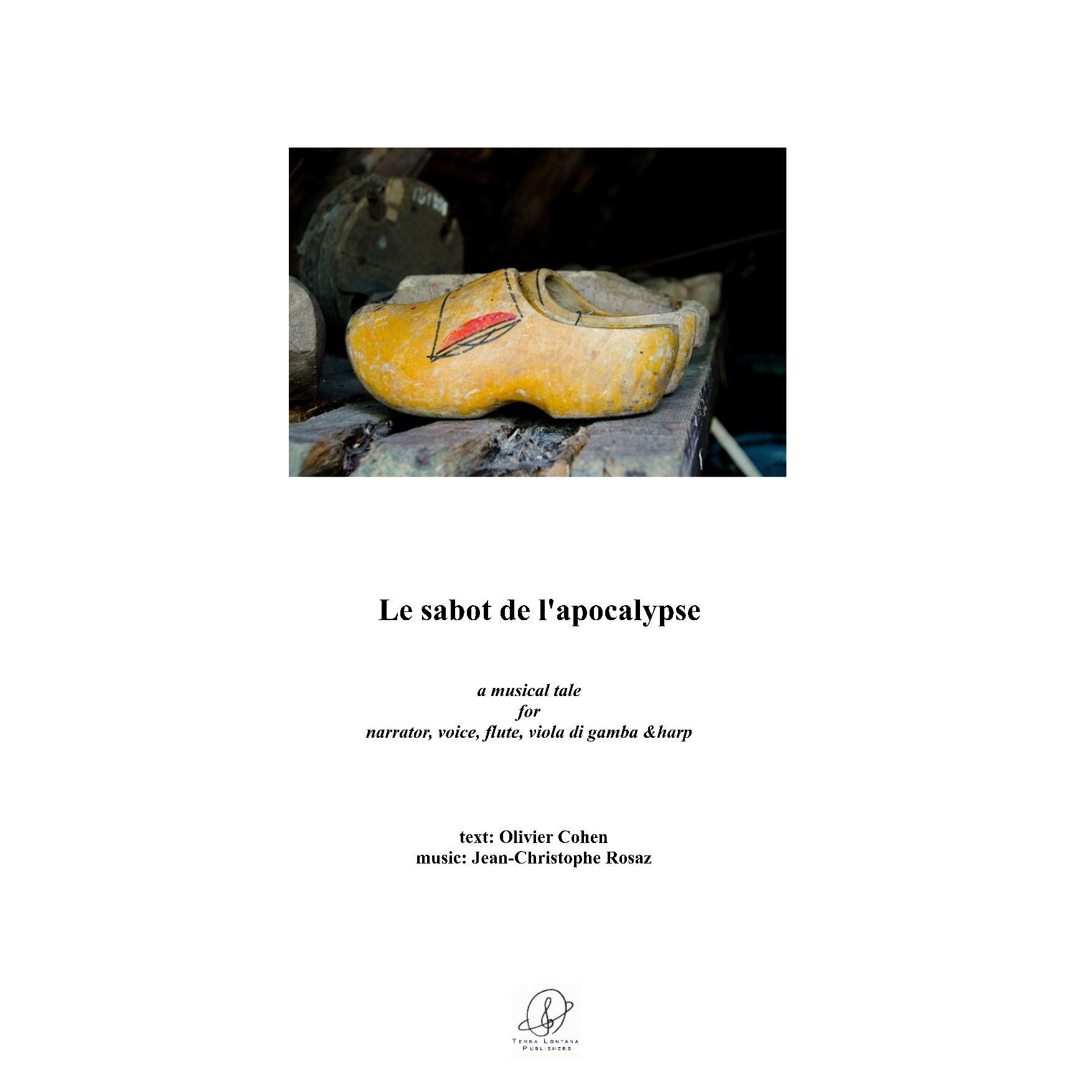
résumé: Un sacristain trouve un sabot rouge devant son église. Il court en informer son curé, celui-ci lui répond: je pense qu’il s’agit d’un simple sabot perdu par un paysan. Un terrible orage éclate, la foudre tombe sur le clocher y mettant le feu. La rumeur se propage: c’est le sabot du diable! Le bourgmestre convoque son conseil et charge le garde-champêtre de l’enquête. Chez la veuve Tordoir la vache ne donne plus de lait et les poules ne pondent plus. Le forgeron a entendu des bruits étranges près du cimetière. Le pain du boulanger n’a pas levé. On envoie le sabot au monastère se faire examiner. Au cours du trajet, le jeune clerc Basile le laisse tomber dans la rivière. Le sabot finit par briser un engrenage du moulin situé en aval. Le bruit court qu’il sème la panique sur son passage. Une émeute explose, allant crescendo. On promet une récompense à qui le trouvera. Les soldats envoyés pour calmer les troubles, mal payés, pillent les fermes. On est au bord de la guerre civile. Louis XI fait mine d’aider ses voisins, le duc de Bourgogne en représaille manque de peu de déclarer la guerre à la France. Un matin le sabot est retrouvé chez une lavandière qui, ignorant tout de l’histoire, l’a posé sur le rebord de sa fenêtre. On organise un procès, le sabot est enfermé dans une cage suspendue. C’est alors que Théophile se présente en disant que c’est son sabot. On cloua celui-ci sur un pilori avec l’inscription « Voici comment peur et sottise peuvent détruire une province. »
Summary: A sacristan finds a red wooden shoe outside his church. He rushes to tell the parish priest, who replies that it is likely just an ordinary shoe lost by a peasant. A terrible storm breaks out, and lightning strikes the bell tower, setting it ablaze. Rumors spread: it is the Devil’s shoe! The mayor summons his council and tasks the rural guard with investigating. At Widow Tordoir’s farm, the cow has stopped giving milk and the hens have stopped laying eggs. The blacksmith has heard strange noises near the cemetery. The baker’s bread failed to rise. The shoe is sent to the monastery for examination. Along the way, a young clerk named Basile drops it into the river. The shoe eventually breaks a gear in the mill downstream. Word spreads that it is sowing panic wherever it goes. A riot erupts and escalates rapidly. A reward is promised to whoever finds it. Soldiers sent to quell the unrest—poorly paid as they are—begin looting farms. The region teeters on the brink of civil war. Louis XI pretends to help his neighbors, while the Duke of Burgundy, in retaliation, nearly declares war on France. One morning, the shoe is discovered at the home of a washerwoman who, unaware of the whole affair, had simply placed it on her windowsill. A trial is held, and the shoe is locked inside a suspended cage. Then, a man named Théophile comes forward, claiming the shoe is his. It is subsequently nailed to a pillory bearing the inscription: « Here is how fear and folly can destroy a province. »